The Age of
AI Coding Assistants
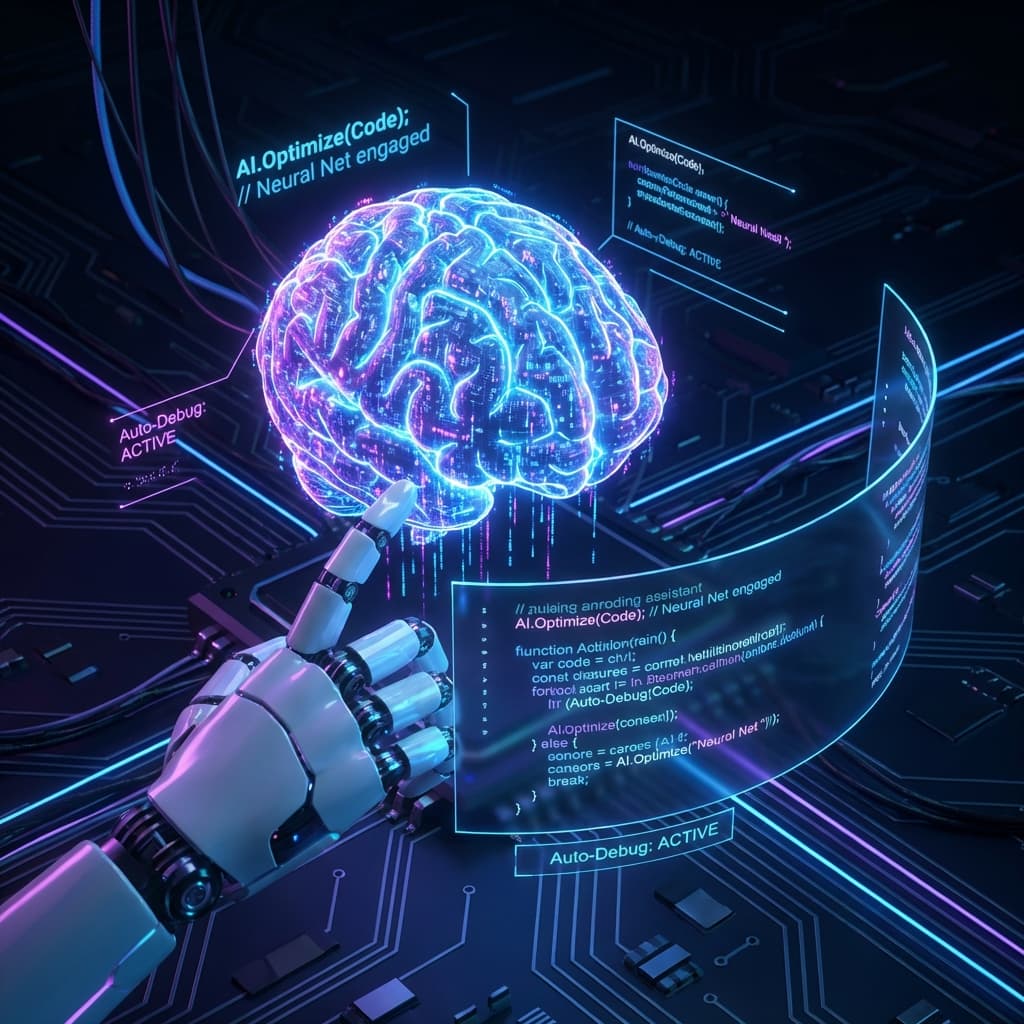
It started with simple autocompletion. Then came Copilot. Now, we have full-fledged agents like Devin and Cursor that can refactor entire codebases. We are witnessing the most significant shift in software engineering history.
In 2026, the question is no longer "Should I use AI?" but rather "How do I architect systems when writing code is free?" The barrier to entry for building software has collapsed, but the ceiling for architectural complexity has skyrocketed. Let's dive deep into the current landscape, the tools defining it, and the skills you actually need to survive.
From Autocomplete to Autonomy
The shift from "Chat" to "Agents" is the defining trend of late 2025. Early AI tools required you to copy-paste context. Modern tools like Cursor Composer and Windsurf run in loops: they plan, execute terminal commands, read errors, fix their own code, and re-run tests until they pass.
> Agent: I detected a type error in auth.ts.
> Agent: Reading file...
> Agent: The 'User' interface is missing 'role'.
> Agent: Updating 'types/user.ts'...
> Agent: Fixing 'auth.ts'...
> Agent: Running tests... ✅ Passed.
A typical log from a modern autonomous coding agent.
!The Junior Developer Crisis
This is the elephant in the room. If AI can write junior-level code faster and cheaper than a human, what happens to entry-level jobs?
The role of a "Junior Developer" is evolving into "Junior Architect" or "AI Orchestrator." The dangerous trap for new engineers is the Cargo Cult of AI: copy-pasting code you don't understand.
Warning: The "Illusion of Competence"
AI makes you feel productive immediately. But if you cannot debug the code when the AI inevitably gets stuck, you are not an engineer; you are a prompt typist. You must learn the fundamentals deeper than ever before to effectively review the AI's output.
#How to Thrive in the AI Era
The engineers who are commanding the highest salaries in 2026 are not the ones who resist AI, nor the ones who blindly trust it. They are the Synthesizers.
- 01System Design over SyntaxWriting a
forloop is now a solved problem. Designing a distributed system that is fault-tolerant? That still requires deep human judgment. - 02Debugging ProficiencyAI writes code 10x faster, which means you can create bugs 10x faster. Advanced debugging skills and understanding memory management are more critical than ever.
- 03CommunicationAs we move towards natural language programming, your ability to clearly articulate requirements—to both humans and machines—is your primary coding skill.
New Entrants Reshaping the AI Coding Landscape
Since this post was first published, three new models have dramatically raised the bar:
- NEWGoogle Gemini 2.0 Flash — Near-instant code generation with native multimodal input. You can now share a screenshot of a UI and ask it to write the code for it. A serious challenger to Copilot for everyday tasks.
- NEWDeepSeek R1 — The open-source model that shocked the industry. Comparable reasoning to GPT-4o at a fraction of the cost, now integrated into Cursor and Windsurf as an alternative backend model.
- UPDATEClaude 3.5 Sonnet (Anthropic) — Now widely regarded as the best model for large-codebase refactoring and long-context tasks. Its ability to hold 200K tokens of context makes it uniquely suited for enterprise-scale projects.
The trend is clear: model choice is becoming a first-class feature of AI coding tools. The best editors now let you swap the underlying model per task.
Conclusion
AI coding assistants are the most powerful lever we've ever been given. They raise the baseline of what a single developer can build. We aren't just writing code anymore; we are directing a symphony of digital intelligence.
Don't fear the tool. Master the craft, and let the tool handle the drudgery.